
Reviews - Orphan
Orphan
Reviewed By Stephanie Daly-Parks
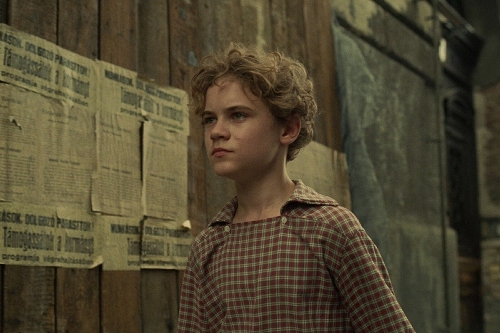
Orphan
Last Sunday we watched 'Orphan', from Hungarian Director Lazlo Nemes who directed 'Son of Saul'. 'Orphan's colour is sepia dominated and reflects the dreary bombed out post war 2 landscape.
The film's backdrop is Hungary in 1957 still recovering from the Nazi atrocities having been 'liberated' by the Soviet Union after the war. Antisemitism is still rife. Hungary rebelled against its Soviet masters with a revolutionary government in 1956 under reformist Imre Nagy. This results in the Soviets replacing him with their hardline communist leader Matyas Rakosi.
In the film, Andor, a 16 year old Jewish boy has been raised by his mother, helps his friend Sari hide her activist brother from the Soviet police who were brutally searching out and shooting dissidents. Any rebellion post 1956 was squashed.
The film delivers the hard line truth that the Hungarian people have to swallow the fact that they have no control over their self-determination. They are orphaned by the times they live in. Andor reveres his unknown father, Hirsch who disappeared during the war in the concentration camps. Andor still talks to him in the basement of the block he and his mother live in.
His mother changes everything by dating a brutal thug and who claims to be Andor's real father. The mother seems to want the man to provide security for herself and Andor. The film story of Andor may be seen as a metaphor for what happens to Hungary in 1956. The thuggery of the Soviet Police seems to be everywhere.
Andor hates the thug that has become his mother's lover. She responds to her son by saying the more you hate him the more like him you become. She accepts the condition she now lives with. Her son plays out the rejection of the father figure being permanently angry at the world.
The film explores the struggling acceptance of an inevitable yoke.
The film's backdrop is Hungary in 1957 still recovering from the Nazi atrocities having been 'liberated' by the Soviet Union after the war. Antisemitism is still rife. Hungary rebelled against its Soviet masters with a revolutionary government in 1956 under reformist Imre Nagy. This results in the Soviets replacing him with their hardline communist leader Matyas Rakosi.
In the film, Andor, a 16 year old Jewish boy has been raised by his mother, helps his friend Sari hide her activist brother from the Soviet police who were brutally searching out and shooting dissidents. Any rebellion post 1956 was squashed.
The film delivers the hard line truth that the Hungarian people have to swallow the fact that they have no control over their self-determination. They are orphaned by the times they live in. Andor reveres his unknown father, Hirsch who disappeared during the war in the concentration camps. Andor still talks to him in the basement of the block he and his mother live in.
His mother changes everything by dating a brutal thug and who claims to be Andor's real father. The mother seems to want the man to provide security for herself and Andor. The film story of Andor may be seen as a metaphor for what happens to Hungary in 1956. The thuggery of the Soviet Police seems to be everywhere.
Andor hates the thug that has become his mother's lover. She responds to her son by saying the more you hate him the more like him you become. She accepts the condition she now lives with. Her son plays out the rejection of the father figure being permanently angry at the world.
The film explores the struggling acceptance of an inevitable yoke.
Find A Film
Search over 1525 films in the Keswick Film Club archive.
Film Festival

27 Feb - 1 Mar 2020
Friends
KFC is friends with Caldbeck Area Film Society and Brampton Film Club and members share benefits across all organisations
Awards
Keswick Film Club won the Best New Film Society at the British Federation Of Film Societies awards in 2000.
Since then, the club has won Film Society Of The Year and awards for Best Programme four times and Best Website twice.
We have also received numerous Distinctions and Commendations in categories including marketing, programming and website.
 Talking Pictures
The KFC Newsletter
Talking Pictures
The KFC Newsletter
Links Explore the internet with Keswick Film Club